Convention Planning Timeline: Lead Times That Work
Most convention problems are not production problems. They are sequencing problems. A venue signed three months late pushes the AV brief into the peak-season squeeze, the rigging load gets re-costed twice, and the opening keynote plays on a screen that was sized for the old room. Locking the conference event management in Paris sequence before anything else is booked is what keeps the AV budget stable.
This guide maps the convention planning timeline from the venue hold to the load-out: what to lock at each stage, when the AV booking window opens, and where a workable contingency plan has to sit. It is a planning document, not an AV specification — the screen engineering lives in the AV layer of running a convention.
Why the Convention Timeline Breaks
A convention is three projects running on one calendar: a venue and logistics project, a programme and speaker project, and an AV and production project. They compete for the same hall, the same power, the same load-in window and the same crew.
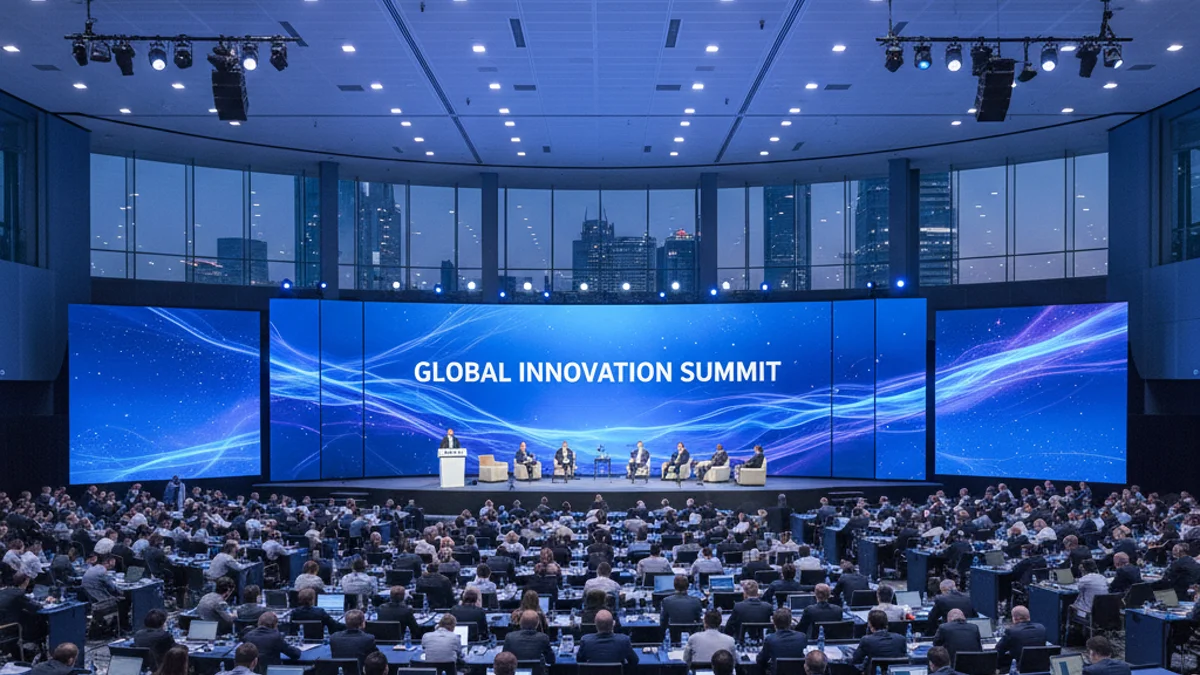
The classic failure looks like this. The programme team confirms a 900-seat plenary eight weeks out. That is inside the window where conference LED screens, rigging labour and switchable processing have already been committed to other events. You either pay a premium, accept a smaller pitch that reads badly from row 20, or rebuild the room.
The fix is a single shared timeline where every stream — venue, budget, programme, AV, logistics — has an explicit decision date.
The Convention Planning Timeline at a Glance
| Phase | When to start | What gets locked | AV touchpoint |
|---|---|---|---|
| Venue & dates | 12–18 months out | Hall, date hold, draft floor plan | Load-in routes, rigging points, ceiling height |
| Budget & sponsorship | 9–12 months out | Budget envelope, sponsor packages | Power, rigging, technical labour line items |
| Programme & speakers | 6–9 months out | Session grid, keynote, track count | Screen count, stage width, content formats |
| AV & production booking | 4–6 months out | Screens, audio, lighting, crew | Video wall, pixel pitch, processing, redundancy |
| Logistics & build | 6–8 weeks out | Stands, signage, registration | Digital signage, wayfinding, comms links |
| Rehearsals & contingency | 1–2 weeks out | Run-of-show, backup plans | Signal redundancy, spares, power backup |
Read the table top to bottom and you have the booking sequence. The AV window sits in the middle by design: it is early enough to secure stock and late enough that the programme has stopped moving.
Venue-Booking Sequence: What to Lock First
For a convention with a large plenary, three venue attributes drive everything downstream:
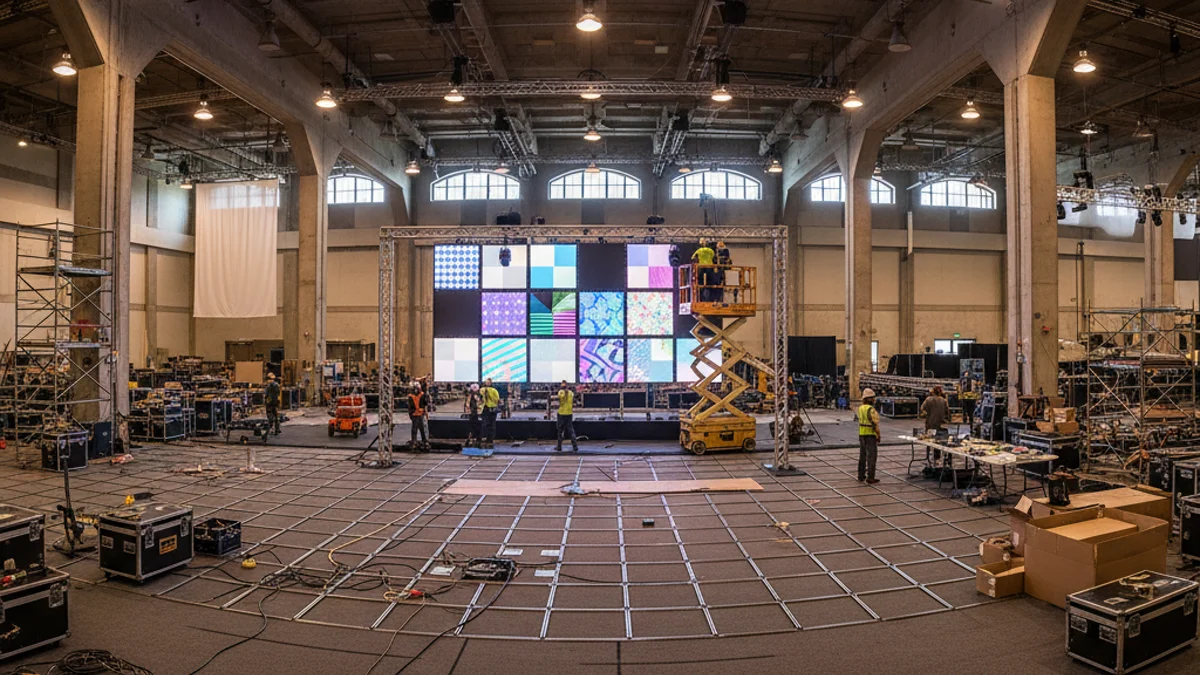
- Rigging capacity. Ceiling height, structural rigging points and the venue’s permitted point loads determine whether you can hang a wide LED wall or have to ground-support it. Ground-support eats floor space and sightlines.
- Power supply. Ask for the available supply in kW, the phase configuration and the distance from the distribution board to the stage. A plenary LED wall plus lighting plus audio draws a serious three-phase load; if the nearest supply is 60 metres away, cable runs and distribution become a cost line.
- Load-in and load-out windows. These define how many build days you have and whether the AV crew works in a straight shift or a premium overnight shift.
Lock these three before you sign, not after.
AV Booking Windows: When to Reserve Screens, Rigging and Power
Wide-format conference LED is finite stock, and in a busy Paris season the same panels are wanted by congresses, product launches and trade fairs at the same time. That is why the AV window opens 4–6 months out and closes hard.
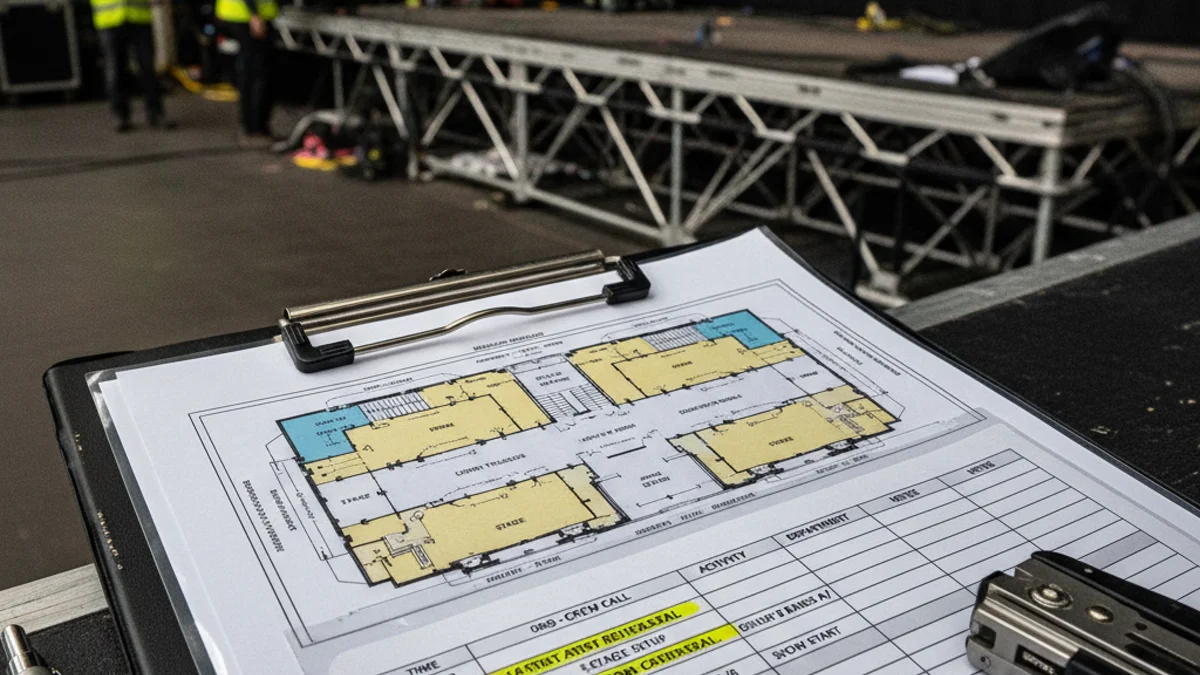
At the 4–6 month mark you should be able to answer: how wide is the stage wall, at what pixel pitch, at what resolution, and with how much processing and redundancy. The LED resolution and pixel pitch choices for conference stages are worth settling here rather than in the final month.
Two practical rules from the production side:
- Book the pitch, not the metre. Decide the pixel pitch from the furthest seat in the room, then let the screen size follow. Choosing a size first and a pitch second is how you end up with a wall that looks soft from the back rows.
- Book the crew and the processing at the same time as the panels. Panels without a switcher, a media server and a crew call is half a booking. Reserve them together.
Worked Example: A 900-Delegate Plenary in Paris
A mid-size association congress books a Paris hall for a 900-delegate plenary plus four breakout rooms. Using the timeline above:
- 15 months out: date hold and venue signed. Rigging points confirmed, 63A three-phase supply confirmed at stage left, two full load-in days.
- 10 months out: budget set. AV line includes screens, audio, lighting, rigging and crew, with a contingency of roughly 8–10% held back.
- 7 months out: programme locked. One main plenary screen plus confidence monitors, four breakout rooms, hybrid feed to a remote audience.
- 5 months out: AV booked. Wide main wall sized from the back-row viewing distance, matching pixel pitch, media server, redundant signal path, crew call agreed.
- 6 weeks out: logistics. Registration, signage and wayfinding screens confirmed.
- 1 week out: rehearsals. Full technical run, backup media server tested, spare panels on site.
The value is that each decision had a date. When the keynote speaker changed slide format ten days out, the screen was already specified for it and the change cost nothing.
For the smaller-room end of the same event, the conference room AV setup guide covers the breakout-room display, audio and control choices in more detail.
Step-by-Step Convention Planning Checklist
- 18–12 months out — lock the venue. Confirm rigging points, ceiling height, power supply and load-in windows in writing before signing.
- 12–9 months out — set the budget. Include AV, rigging, technical labour and a contingency line. Sponsorship packages should name AV-visible benefits.
- 9–6 months out — lock the programme. Freeze the session grid and keynote so screen count and stage width can be specified.
- 6–4 months out — book AV. Reserve screens, audio, lighting, processing, rigging and crew together, with a written spec.
- 8–6 weeks out — finalise logistics. Registration, signage, wayfinding and exhibitor build confirmed against the floor plan.
- 4 weeks out — write the run-of-show. Include every content change deadline and a cut-off for late slide submissions.
- 1–2 weeks out — rehearse and test. Full technical run, backup signal path, spare panels and a named on-site AV lead.
- Post-event — capture feedback. Debrief with AV, venue and programme teams while details are fresh, and feed it into the next cycle.
Contingency Planning: The Three Failure Points
Contingency is three specific plans for three specific failures.
Signal failure. Every critical screen should have a redundant signal path — a second feed, a backup media server and, where it matters, a spare panel or two on site. A single-source plenary screen is a single point of failure.
Schedule failure. Build a run-of-show that assumes one session overruns. The AV team needs a clear protocol for who calls the change and how content is switched live.
Power failure. For a plenary with a large LED wall, confirm whether the venue provides a backup supply and how long it holds. If it does not, decide in advance what runs on a small uninterruptible supply — usually the switcher, the server and the comms.
Write all three into the production document. A contingency plan that only exists in someone’s head is not a plan.
Cost Drivers: What Moves the Invoice
The invoice is not driven by panel count alone. Four things move a convention AV budget more than anything else:
- Booking window. Booking inside 8 weeks during a peak season is the single largest premium. The timeline protects you here.
- Rigging versus ground support. If the venue cannot take the load, ground-support structures add material, labour and floor space.
- Power and distribution. Distance from the supply to the stage drives cable, distribution and labour.
- Crew shift pattern. Overnight and premium build shifts cost more than a straight day shift. Load-in windows you negotiated at the venue stage decide this.
Frequently Asked Questions
How far in advance should convention AV be booked?
Four to six months out is the working window. It is late enough that the programme has stopped moving and early enough to secure the right pixel pitch, processing and crew before peak-season stock is committed elsewhere.
What should be locked before the venue is signed?
Rigging capacity, power supply and load-in windows. These three determine whether a wide LED wall can be hung and powered, so they belong in the venue decision, not after it.
Is a video wall worth it for a 900-delegate plenary?
For any room where the back row is more than about 15 metres from the stage, yes. A correctly pitched LED wall keeps text and video legible across the room, which a single projector cannot do at that distance.
What is a realistic AV contingency line?
Hold roughly 8–10% of the AV budget for contingency. It covers late content changes, an extra crew call or a power fix — the small overruns that otherwise land as unexpected invoices.
When should the run-of-show be finalised?
About four weeks out, with a hard cut-off for late slide submissions. After that, changes should route through a named AV lead so the technical team is not chasing moving content during rehearsals.
Plan the Timeline, Then Book the Screens
The convention planning timeline is the cheapest piece of risk control you have. When the event runs on a hybrid feed as well as a live hall, the timeline has to carry the hybrid event production requirements from the programme stage, not the final week.
If you are building a convention in France and want the AV window planned against a real venue and a real programme, request a quote with your dates, delegate numbers and floor plan. We will map the booking sequence back from your load-in day.
By the Paris Video Wall Technical Production Team — planning and delivering LED screen and event production for conventions, congresses and conferences across France.