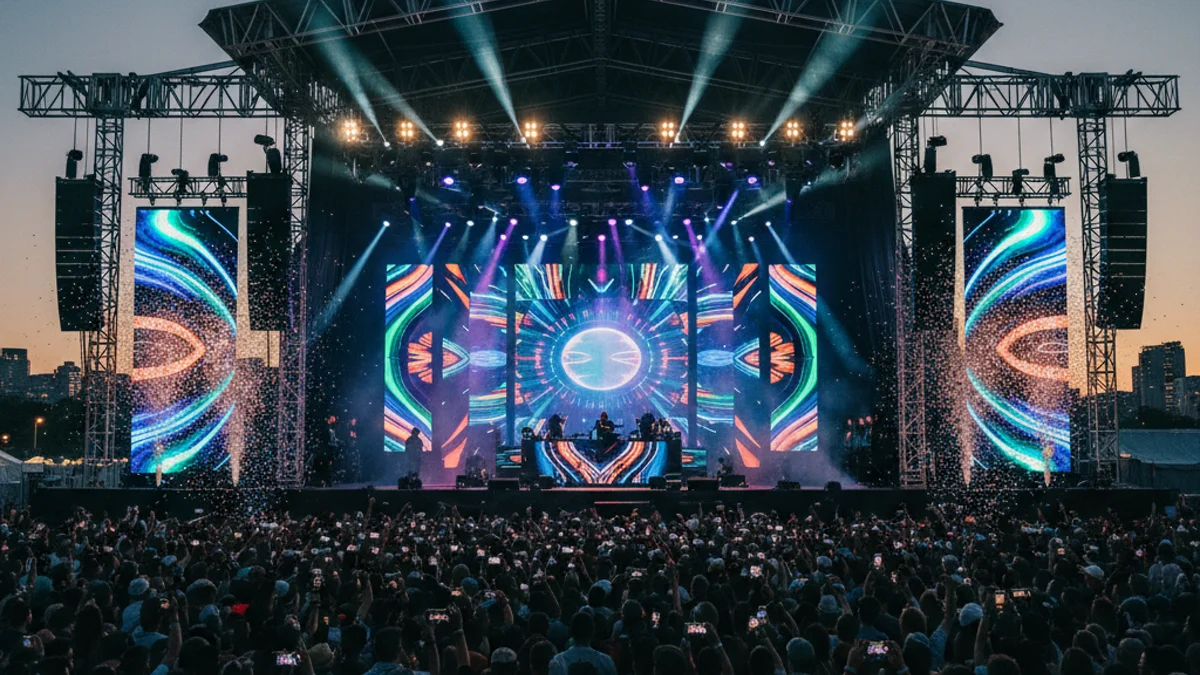
A festival stage is a structural problem before it is a visual one. The LED wall changes the load, the roof, the sightlines and the build sequence at the same time, so it has to be designed into the stage from the first sketch rather than hung on the back of a finished design. Get the placement right and the wall carries the show from the back of a field; get it wrong and you have paid for a bright surface that half the crowd cannot see. For a wall sized to a live audience, LED screen rental for concerts is where the geometry starts. This is how the display sits inside the stage structure, and the decisions that have to be made before the roof goes up.
The stage is a frame, and the wall is the largest face on it
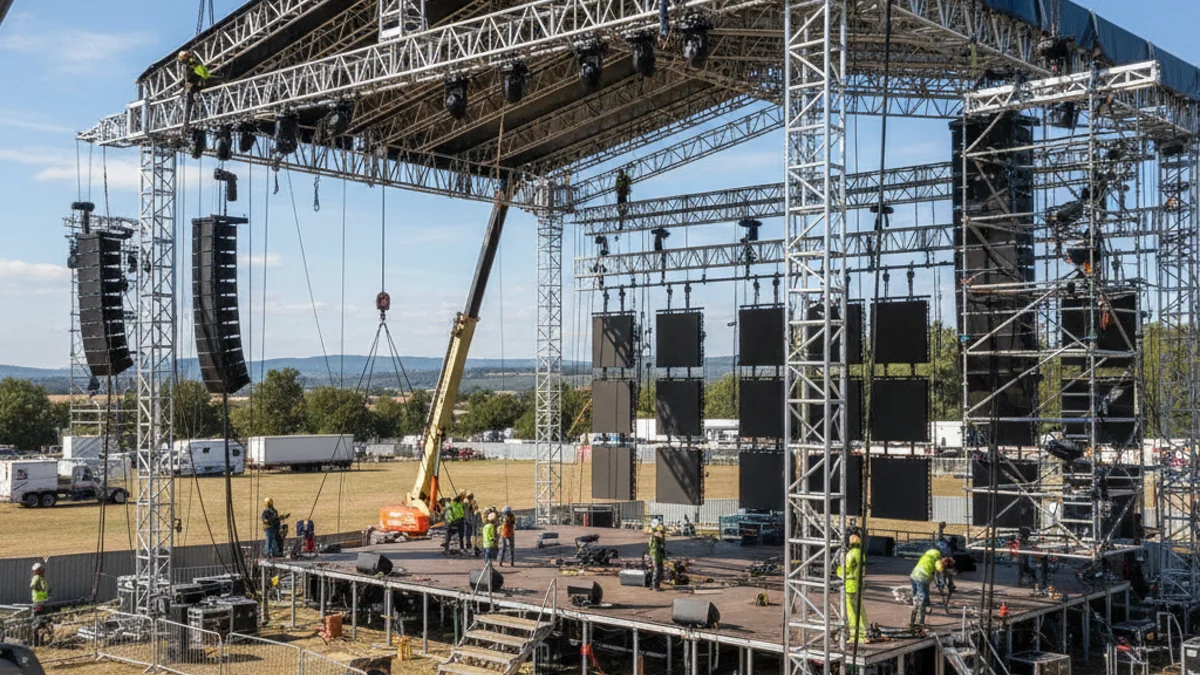
Festival stages are usually a truss roof on towers with a deck inside it. The LED wall typically occupies the whole upstage face, which makes it the biggest single load and the biggest single surface on the structure. Two consequences follow immediately. First, the wall’s weight and the way it is hung must be inside the roof’s rated capacity at the specific points it attaches to — not the average, the actual points. Second, because the wall is the dominant face, the rest of the design — lighting positions, side masking, performer entrances — has to be planned around it. A lighting rig that steals the sightline to the top of the wall is a rig in the wrong place.
Sightlines decide the wall before the wall decides anything else
The controlling viewer at a festival is not the person front row centre; it is the person on the far side of the field. Walk the site and mark the extreme seats: the back of the standing area, the far wings, and any elevated position. Then set the wall height so the bottom edge clears the standing crowd — for a standing audience that is roughly 1.8 to 2.4 m above the ground — and tilt the face 5 to 10 degrees down if it is flown high, so the viewing cone lands on the crowd rather than over their heads. A wall that is mounted too high pushes every close viewer into the neck-craning zone; one too low blocks the back of the crowd. Both are geometry errors that no amount of content can fix.
Width matters as much as height. A very wide field needs either a wider wall, a curved wall, or angled wing screens to keep the far sides from viewing the screen edge-on. Check the panels’ horizontal viewing angle before you assume the side seats are covered; a specification of roughly 140° or wider is the working target for a broad audience.
Native canvas, not 16:9
Content teams routinely brief a 16:9 master and then discover the wall is a different shape. LED walls are built in cabinet increments — commonly 500 × 500 mm panels locking together borderless — so the finished size is a multiple of half a metre and the native pixel canvas is width_mm / pitch by height_mm / pitch. A stage wall wide enough to span a festival stage is almost always wider than 16:9, which means a standard master letterboxes with black bars top and bottom on a surface the client paid for by the square metre. Decide the canvas early, deliver content to it, and treat the black bars as a design failure, not a default.
Pitch follows viewing distance. The trade working rule is that 1 mm of pitch suits roughly 1 m of comfortable viewing; a festival crowd sits far from the stage, so a coarser pitch is normal here and a fine pitch is wasted money. The nearest rows still have to look clean, and camera positions — IMAG on the wall — impose their own pitch limit, so the closest viewer and the closest camera both set the floor.
Where the wall sits in the stage plan
| Wall position | What it buys | What it costs |
|---|---|---|
| Full upstage face | Maximum surface, clean IMAG backdrop, strong from the field | Heaviest roof load, blocks upstage entrances unless masked |
| Upstage with side masking | Conceals entrances and band gear behind the wall | Extra scenic build, tighter stage depth |
| Wing screens left and right | Reaches side fields, lets the centre focus on the artist | More cabinets, more processing, sightline conflicts with towers |
| Floated wall above the deck | Performers play in front of and below the image | Lowest edge must clear heads; risk of blocking the artist |
Performer and crew needs run through the same plan
A wall that covers the upstage face removes the natural cross-over behind the artist, so entrances move to the wings and the stage depth has to grow to keep them clear. Quick changeovers between acts depend on that depth and on wing space for cases. The video crew needs a path to the processor, a service route to reach failed modules without striking the whole wall, and front-serviceable cabinets so a single dead module is a five-minute swap. On a touring build the wall also has to survive a load-out window at 2 a.m.; every cabinet tracks back into its flight case in order.
Content that earns a festival wall
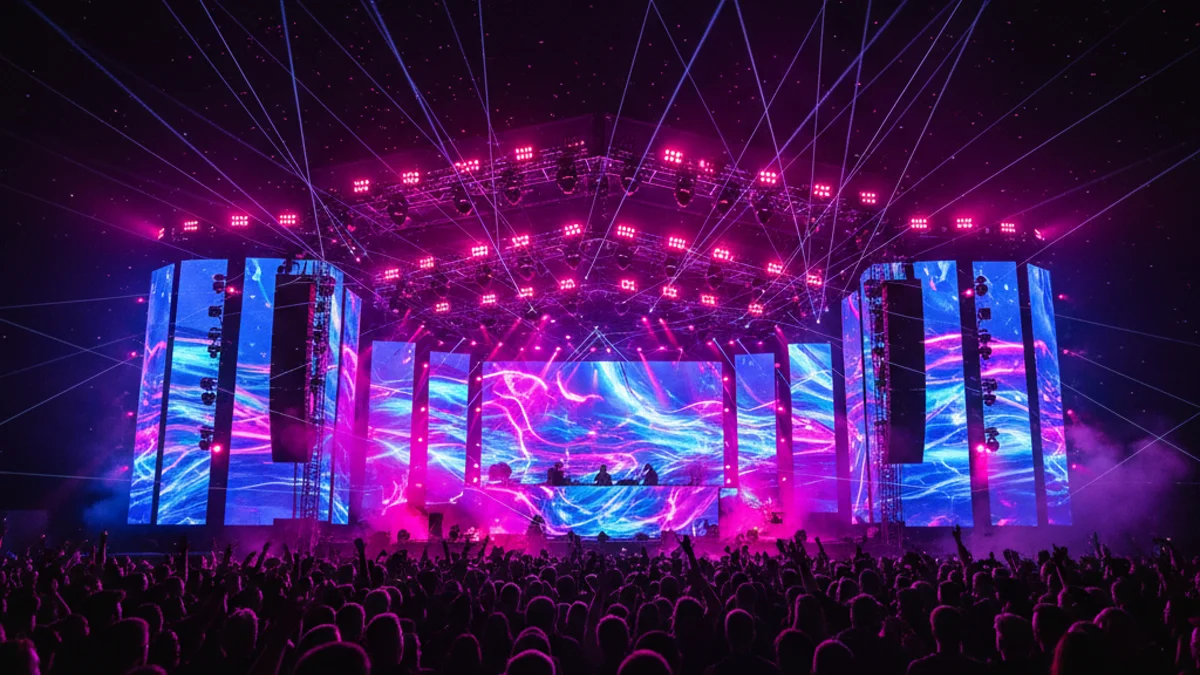
A festival audience passes through, it does not sit and read. Segments of 6 to 10 seconds, one idea each, no audio dependency, in a loop of 45 to 90 seconds so returning visitors see something new. Product in motion, a silent process or demo, and live data or an interactive configuration all use the surface well. Burned-in subtitles sized for a seated room are unreadable from a field, and a logo held static for three minutes wastes the largest thing on stage. Spell out the loop length and segment length in the content brief so the wall is not filled with a slide deck.
Outdoor build, and what changes on site
An outdoor stage sits under weather, so the wall’s structural note, wind load and rain cover are part of the stage design, not an afterthought. Rain covers live on the wall overnight; the rig has to resist the worst forecast gust. The wider outdoor picture — sun, weather, wind load and generator capacity — is covered in our post on festival LED and video production outdoors. For the arena-scale lessons that apply to any large stage wall, what the world’s largest LED screens teach event producers is the companion read.
The build sequence
- Mark the site and the extreme sightlines before any design is signed off.
- Set wall size in cabinet increments and the pitch from the closest viewer and camera.
- Design the roof and pick-up points to carry the wall’s weight at the actual attachment points.
- Fix the wall height and tilt so the bottom edge clears the standing crowd.
- Reserve service access and a route to the processor for the video crew.
- Brief content to the native canvas, with segment and loop lengths fixed.
- Test patterns from every camera position and sightline before doors.
Frequently asked questions
Should the LED wall go behind or beside the stage?
Behind, in most designs, so it can carry live feeds and graphics across the whole field. Wing screens are added for very wide sites, but they multiply the cabinet count and the processing and can fight the towers for sightlines.
Why is the wall width fixed to half-metre steps?
Because cabinets are standardised, usually 500 × 500 mm, and lock borderless. The finished wall is a multiple of half a metre, and the content has to be built to the native canvas that produces.
Does a coarser pixel pitch save money on a festival wall?
Usually yes, because the crowd is far away. The floor is set by the nearest viewer and any IMAG camera positions. A fine pitch bought for a distant crowd is budget spent where nobody can see the difference.
How much time does the wall add to the build?
It is one of the longer tasks on the schedule and it gates the lighting focus and content playback. Rig it early, cable and configure it before the lighting rig is focused, and leave a test window that is not squeezed by the first soundcheck.
Placing the wall is a stage-design decision, not a video decision. Fix the sightlines and the structure first, then size the surface to them. When the design is drawn, request a quote and we will work the cabinet count, the pitch and the rigging around your stage plan.