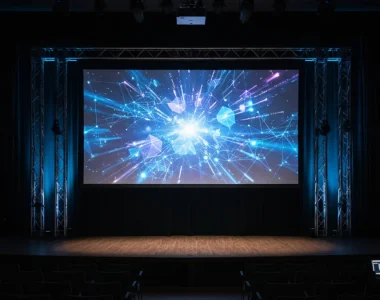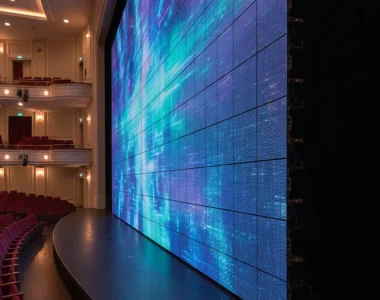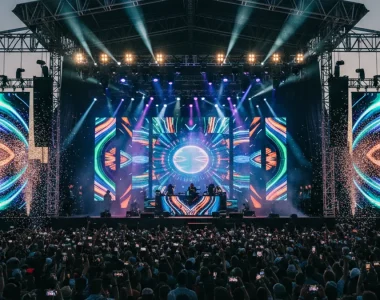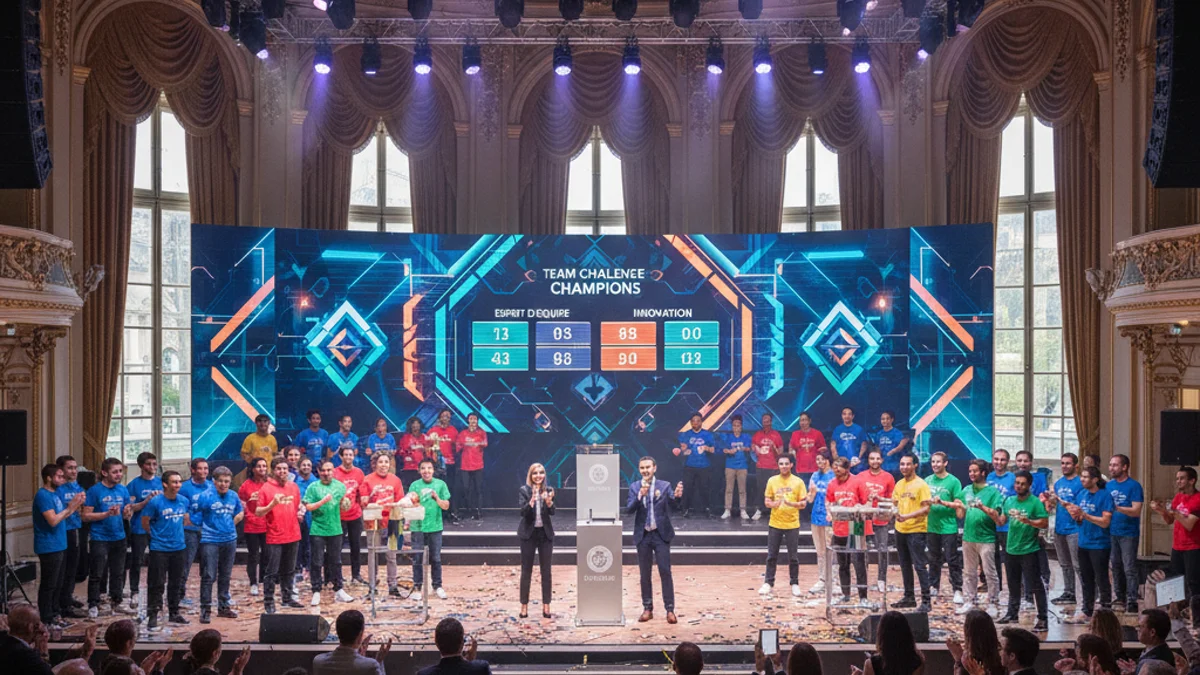
A team-building day collapses for a predictable reason: nobody can hear the instructions and nobody can see the scoreboard. The activity was fine. The AV was not. On a company field day of 200 people, uneven audio coverage means the teams at the back stop playing, and a leaderboard projected onto a bedsheet in a bright hall is unreadable past the third row. The one piece of kit that fixes both problems is an LED screen sized and pitched for the room. This guide covers where an LED screen rental earns its place at a team-building event, what changes with group size, and the production decisions that decide whether the day lands.
Why the screen, not the activity, decides engagement
Team-building formats share one trait: they depend on a shared focal point. A game show needs a question board. A scavenger hunt needs a live leaderboard. A company field day needs a scoreboard and a host everyone can hear. Without that focal point, energy leaks out of the room.
An LED wall does three jobs at once at these events:
- Shared information at scale. Scores, timers, clues and rules stay readable from the back of a hall, which a projector in ambient light cannot guarantee.
- Atmosphere. Bright, moving content makes the day feel like an occasion rather than a meeting with a quiz attached.
- Seated or standing, indoor or hybrid. The same wall serves an in-room audience and, with a camera chain, a remote one.
Match the setup to group size
The AV build scales with headcount, not with ambition. Three tiers cover most corporate programmes in France.
| Group size | Screen and audio build | Typical format |
|---|---|---|
| 5–20 | 65″ display or LED poster, one wireless mic, powered speaker | Workshops, escape-room sessions, strategy offsites |
| 20–100 | Mid-size LED wall (3 × 2 m at P2.6), distributed audio, stage lighting | Trivia, innovation pitches, hybrid sessions |
| 100–1,000+ | Large main wall plus side relay screens, wide-area sound, multiple mics | Game shows, field days, charity builds, awards |
Pixel pitch: the number most organisers never check
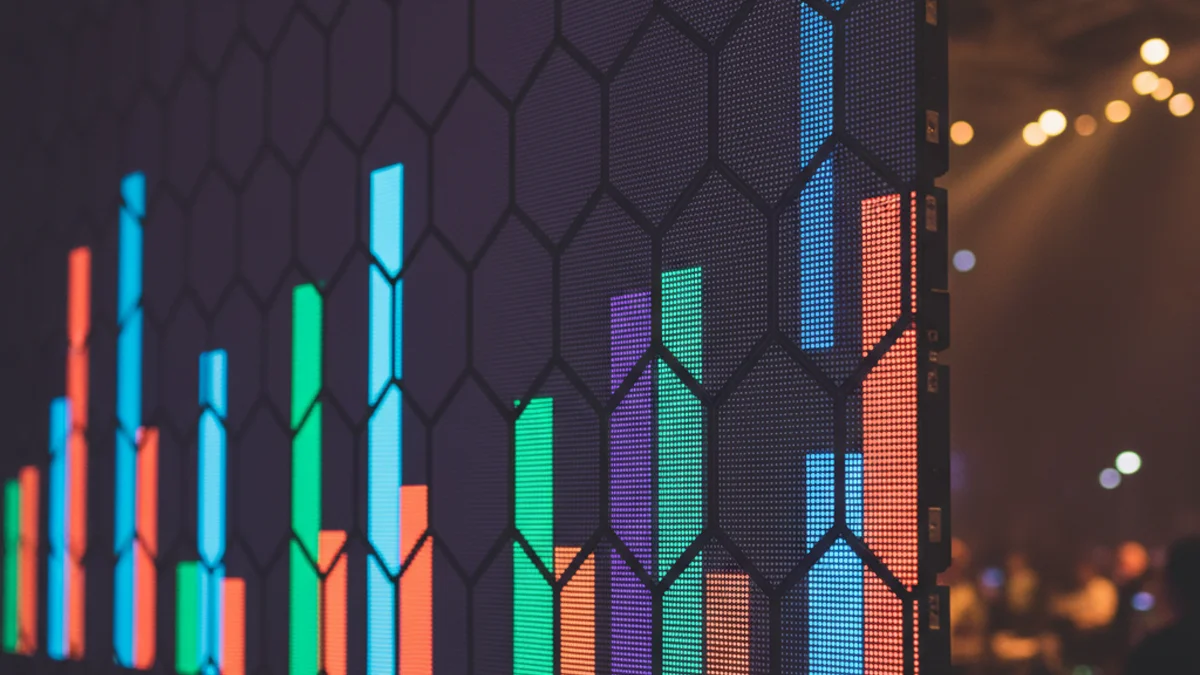
The working rule in the rental trade is 1 mm of pixel pitch per 1 m of comfortable viewing distance. Get it wrong and text content turns to mush at exactly the moment it matters.
| Pitch | Sharp from | Team-building use |
|---|---|---|
| P1.9 | ~2 m | Small-room workshops, text-heavy task briefs |
| P2.6 | ~2.5 m | Mid-size rooms and stage walls — the safe default |
| P3.9 | ~4 m | Very large halls where everyone is seated well back |
| P4.8 | ~5 m | High hanging scoreboards only, seen from across a hall |
Two format traps sit behind most failed builds. Cabinets are 500 × 500 mm modules that lock together borderless, so a wall is built in 0.5 m increments — you cannot order 5.3 m, only 5 m or 5.5 m. And the native canvas rarely matches 16:9: a 5 × 2.5 m wall at P2.6 resolves to roughly 1920 × 960, wider than the frame designers default to. Brief the content team to the native canvas and you avoid black bars on a wall you paid for.
Formats where the wall does the heavy lifting
Some team-building formats are effectively AV products. The wall is not decoration; it runs the activity.
- Corporate game show. Question board, countdown timer and score display on one wall, driven from a single processor. Buzzers and mic channels feed the same operator.
- Scavenger hunt at scale. A live leaderboard updated from scoring apps keeps 200 people competing against each other instead of waiting for results.
- Internal pitch or “shark tank”. Pitch decks on the main wall, presenter mics, judge table, lighting that separates stage from room.
- Charity build. Step-by-step build instructions rotating on the wall at a pace every team can follow.
Where the room layout allows, a small sign near each station keeps teams oriented without staff repeating instructions; see our notes on digital signage display rental for how those extra screens integrate.
Hybrid team-building: the wall plus a camera chain
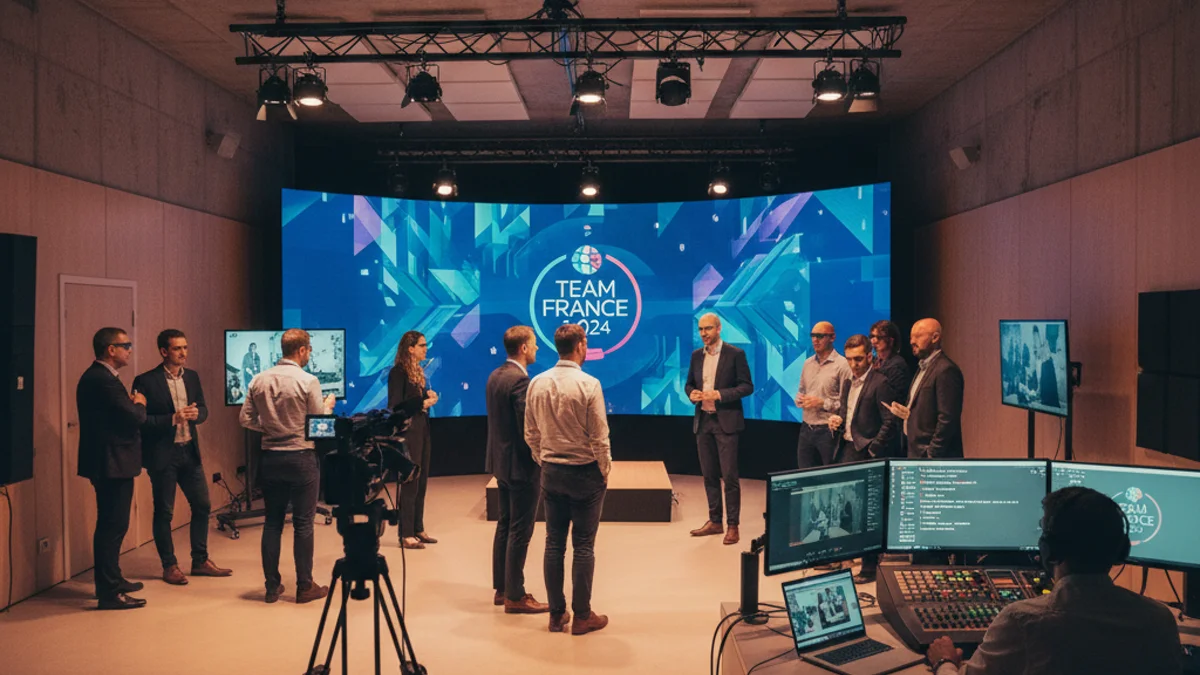
Hybrid formats fail when remote participants feel like viewers of someone else’s party. The fix is a broadcast-style build: multiple cameras, live switching and dedicated audio feeds so the room hears the remote teams and they hear the room.
On the screen side, this means the wall carries the host plus the remote grid plus the scoreboard, and the in-room audience can always see who is speaking. The switching and audio architecture is the same discipline used for conference broadcast, covered in our guide to hybrid event production in Paris.
Audio is the other half of the job
Sound clarity is the single most common failure point at a large team-building event, and it is invisible on a floor plan. A distributed speaker system, not a single stack at the front, is what keeps instructions intelligible at the back of a 40 m hall. Pair it with enough mic channels for the host and each team captain.
When the day also has a presentation or awards segment, the audio and capture requirements stack with the wall; our guide on LED screens for video conferencing and hybrid events covers how those layers combine without conflict.
Power, rigging and the venue’s technical file
The screen and audio build is only half the production plan. French venues add requirements that catch teams who book AV late. A single 5 m P2.6 wall draws in the region of 3 to 4 kW at exhibition brightness, so the electrical supply has to be ordered with the hall plan, not on the morning of the event. Power is metered and billed, and upgrading a supply on site is expensive and sometimes impossible.
Most venues also want a technical file — plans, electrical load and rigging details — submitted to the régie technique weeks ahead. Miss that window and the venue assigns your build slot rather than you choosing it. If the wall is to be flown rather than floor-stacked, the suspension calculation and the riggers both come through the venue’s technical channel, with the point load inside the truss capacity at that spot. And because team-building days often need a full hall to run a field day or a physical challenge, check dock access, door widths and lift dimensions for upper-level halls before committing to a wall size.
Frequently asked questions
Do we really need an LED wall for a team-building event?
Not for a 10-person workshop — a display and a mic will do. Above roughly 30 people, a wall stops being optional, because everyone needs to see the scoreboard and the timer, and the room needs a focal point.
How long should a team-building event run on the screen side?
Aim for a 2 to 4 hour in-room programme and keep the content loop tight: segments of 6 to 10 seconds, one idea each, with a 45 to 90 second cycle so returning players see something new.
Can the same wall serve the game and the awards ceremony?
Yes. Plan the content changes as cues in the run-of-show so the wall switches between the game graphics and the awards deck without dead air.
What is the biggest planning mistake at large team-building events?
Under-specifying audio and pitch. Unreadable leaderboards and uneven sound are why participants at the back disengage — and neither shows up in the budget until it is too late.
Plan the screen before the activity list
Pick the format, then size the screen and the audio to the room, then order power and confirm the French venue’s technical requirements. Done in that order, the activity runs itself; done backwards, you are re-cutting graphics the week before. Send us your group size and venue and we will come back with a wall size, pitch and audio build that fits the day.
Request a quote for LED screens and AV production for your team-building event.