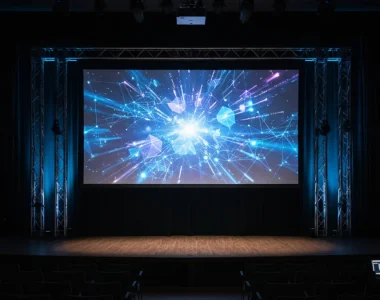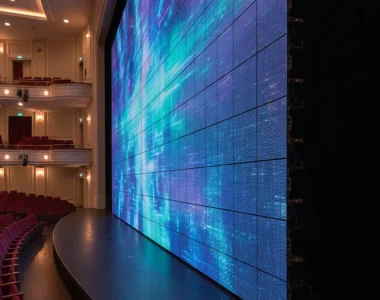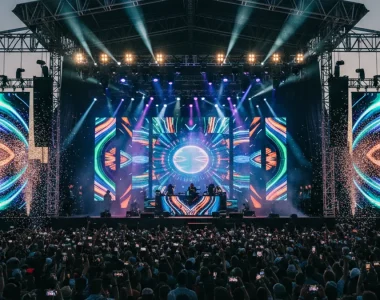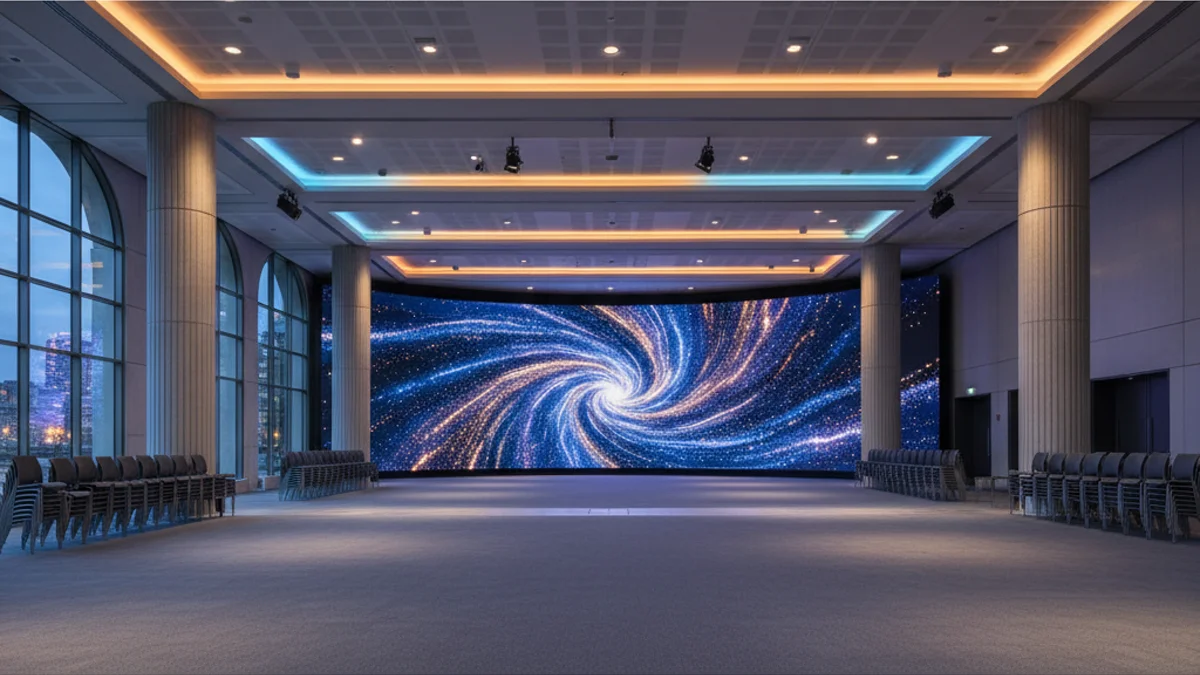
Choosing an event venue in France is a technical decision wearing a location decision’s clothes. Two halls in the same city can look identical in a brochure and behave nothing alike once a 6 m LED wall arrives: one has an 11 m ceiling and a rigging grid, the other a 5 m clear height and a single power drop. The difference shows up as a redesign, a generator rental, or a wall that cannot be flown. This guide runs through the main French venues used for LED-led events, city by city, and the production realities behind each one. For organisers renting an LED screen in Paris or anywhere in France, the venue facts below are what to check first.
What makes a venue ready for an LED build
Before the venue list, the criteria. Every hall passes or fails on the same six points, and they are visible on the technical pack before the contract is signed.
| Check | Pass condition | Failure looks like |
|---|---|---|
| Clear height | Enough for the designed wall plus rigging | A 3 m wall lost under a high ridge |
| Truss grid and points | Approved points with a known load | Wall cannot be flown, floor-stack only |
| Power | Metered supply sized to the full load | Generator rental and street permits |
| Load-in route | Dock, door and lift fit the flight cases | Cases un-cased at the door |
| Acoustics | Speech intelligible at the back row | Glass or concrete reflections |
| Rigging rules | Venue-approved riggers available | No self-clipping to hall trusses |
Paris: two poles, two sets of constraints
Paris Expo Porte de Versailles and Paris Nord Villepinte are the two main exhibition poles, and they behave differently. Porte de Versailles sits inside the city, so the constraint is access and the build window rather than space. Villepinte offers larger halls and taller ridges, which suits a big flown wall, but the load-in distances are longer and the move-in slots are fixed.
For a conference or awards build inside the city, the ceiling height at the stage position is the number to confirm first. A wall designed for a tall hall looks undersized in a hall with a high ridge, and the fix is content design, not a bigger screen.
Power and paperwork in Paris
Power is metered and ordered. A 5 m P2.6 wall draws in the region of 3 to 4 kW at exhibition brightness, before lighting and audio, so the supply is sized against the full technical load and requested with the hall plan. The dossier technique goes to the régie technique weeks ahead; late submission means the venue assigns your build slot.
Lyon: Eurexpo and the regional conference circuit
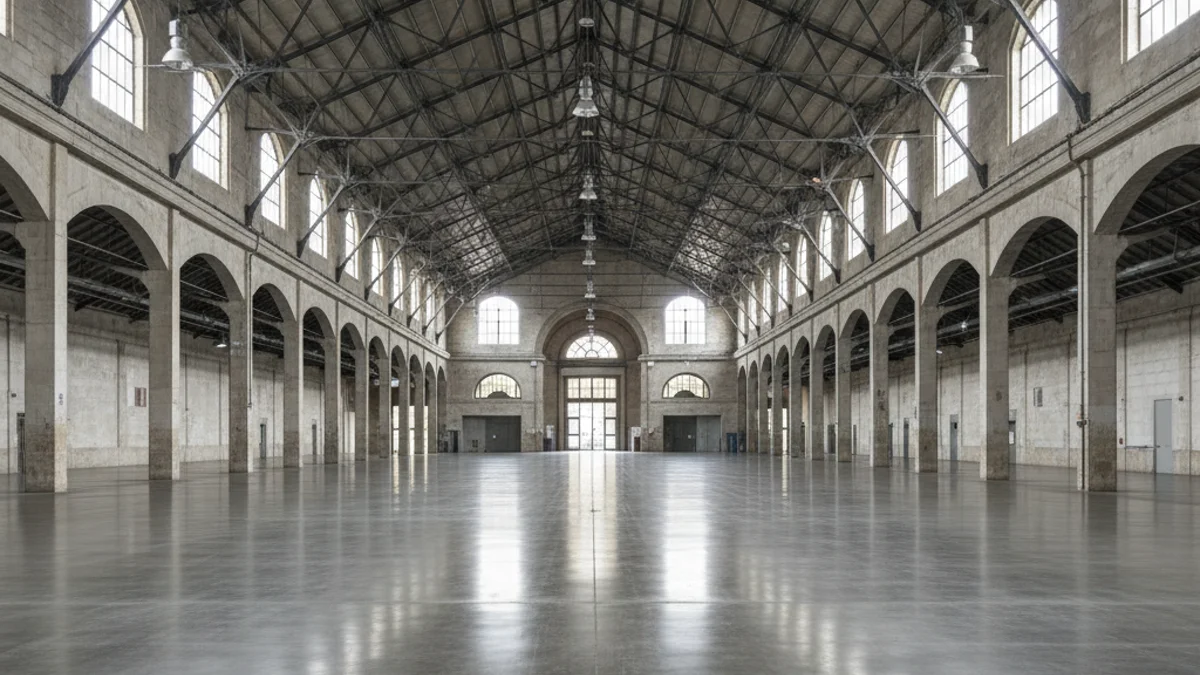
Eurexpo Lyon anchors the south-east circuit. Its halls support large flown builds, and the region’s medical, industrial and tech conferences fill them through the year. The production notes are the same as Paris: confirm clear height, truss capacity and the power drop at the stage position, and route rigging through the venue.
For a multi-session conference, the decision that saves the most labour is whether one wall serves every session or the room is re-set between them. Where the programme allows, a single flown wall with a movable upstage element avoids a rebuild at lunch; the production logic is covered in our guide to conference event management in Paris, and it applies unchanged in Lyon.
Marseille: Parc Chanot and the Mediterranean calendar
Parc Chanot covers the PACA market. Its halls vary in ceiling height, so the wall design has to be checked against the specific hall rather than the venue’s headline measurements. Summer scheduling matters here: a tight move-in window plus heat in a non-climate-controlled hall changes how early the build can start and how long the crew can work.
Where a screen sits over an exhibition stand rather than a stage, the wall integrates with the stand’s structural limits. Our notes on exhibition booth building apply to the same aluminium extrusion and rigging discipline at a Chanot stand.
Nice and Cannes: Palais des Festivals and Grimaldi Forum
The Côte d’Azur venues carry the highest concentration of broadcast-facing events in France. The Palais des Festivals in Cannes and the Grimaldi Forum in Monaco both host content that has to work for a room and a camera at once, which raises the bar on screen placement, audio and lighting.
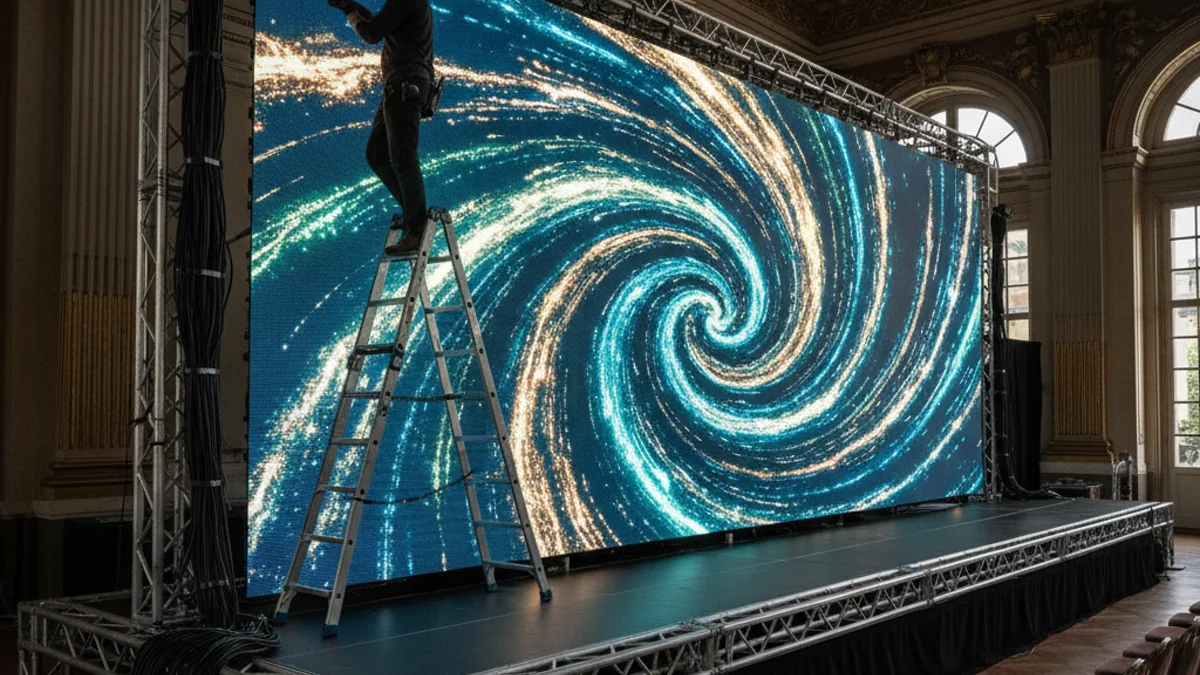
Here the wall often serves two masters: the seated audience and the streamed feed. That means pixel pitch tight enough for on-camera graphics, a consistent colour temperature across the stage, and audio that does not fight the room’s reflections. The technical stack is the hybrid production chain, covered in our guide to hybrid event production in Paris.
Network and hybrid readiness
For any event with a live stream, the venue’s network is a technical requirement, not an afterthought. Do not rely on guest Wi-Fi. Confirm a dedicated hard-wired connection for the streaming gear, test it at the camera positions rather than at the desk, and check the synchronous upload speed against the broadcast target. A stream that drops in the first keynote is not recovered by good content.
For signage across a multi-hall event — wayfinding, sponsor boards, schedule screens — the extra displays integrate with the main wall through the same signal chain; see our notes on digital signage display rental.
One more venue reality worth planning around: fixed move-in and move-out windows are tight at every major French venue. A 6 m wall arrives in flight cases on pallets, so the dock height, the door widths and the lift dimensions all have to be checked against the case sizes before the wall is ordered. A wall that fits the hall but not the freight lift is a problem no amount of content design solves.
Frequently asked questions
Which French city is best for a large LED build?
Paris and Lyon offer the largest flown-build halls (Porte de Versailles, Villepinte, Eurexpo). The right choice depends on the audience, not the ceiling — but a taller hall supports a bigger wall if that is the design goal.
Is power included in a French venue rental?
No. French venues meter and order power separately. Request it with the load figure and the drop location, not on move-in day.
Can we stream from a venue without dedicated internet?
Only at your own risk. Confirm a hard-wired connection and test it at the camera positions. Guest Wi-Fi is not a broadcast link.
Do the same rigging rules apply in every French venue?
The principle is constant — no self-clipping to hall trusses, venue-approved riggers, a structural note for suspended walls — but the specific points and loads come from each venue’s régie technique.
Match the hall to the wall, not the other way round
The venue decision and the screen decision are one decision. Clear height, truss capacity, power load and dock access are fixed long before you book; the job is to read them early and design to them. Whether the event is in Paris, Lyon, Marseille, Nice or Cannes, send us the hall plan and the agenda and we will return a wall size, pitch and power figure that fits the room.
Request a quote for LED screens and AV production in France.