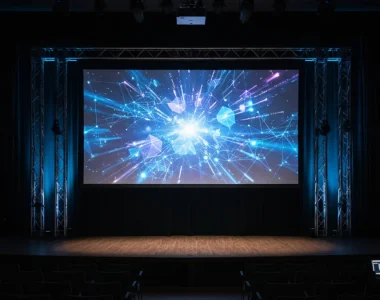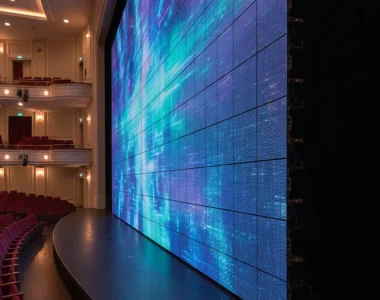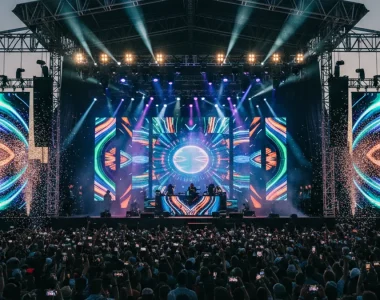
The reveal lands in fifteen minutes. The LED wall is still black.
A product launch is a staging problem before it is a marketing problem. The audience arrives expecting a moment, the CEO expects to walk on clean, and the product expects to be seen at its best. When the reveal works, nobody in the room thinks about the wall behind the presenter. When it fails — a torn seam in the panel array, a presenter lit in orange, a demo video playing at the wrong aspect ratio — the whole message goes with it.
Technical production for a product launch in France means one thing: building the LED, audio, lighting and staging around a single unforgiving deadline, then rehearsing until the cues are muscle memory. This guide covers the components, the planning sequence, the venue traps in Paris, Lyon, Marseille, Nice and Cannes, and how to brief a partner without guessing. Much of the underlying equipment logic — microphone choice, speaker coverage, display selection — is the same discipline set out in choosing AV equipment for conferences and seminars.
What “technical production” actually covers
It is not a truck of speakers and a man with a microphone. A product launch build normally carries five interlocking systems, and every one of them has to survive the same show call.
LED video walls and displays
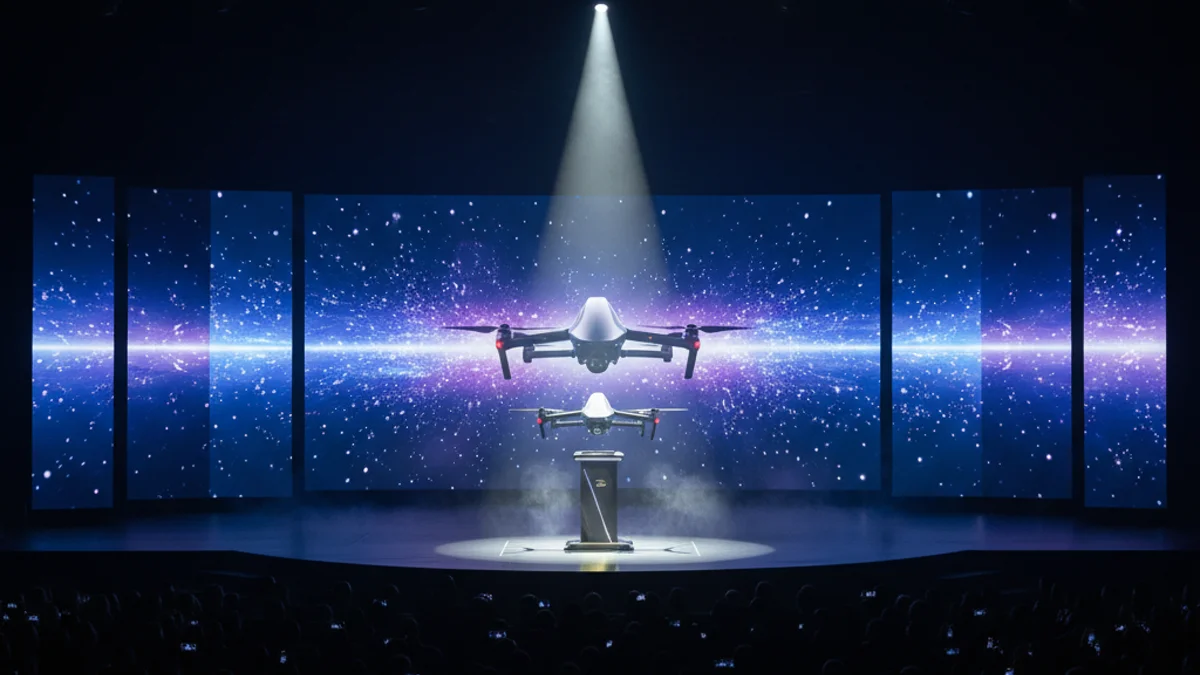
The wall is usually the hero. Panels are built from 2.6mm, 3.9mm or 4.8mm pixel pitch cabinets depending on viewing distance — a 3.9mm wall reads sharp from six metres back, but a front-row press pack at two metres will see pixel structure on anything coarser than 2.6mm. Content has to be authored for the exact pixel map of the array, not for a 16:9 laptop screen. Cabinets are flight-cased, rigged on truss or ground-stacked on a riser, and driven from a media server that handles clean switching between presentations, playback and live camera.
Audio
Corporate launches run on speech intelligibility first. That means the right microphone type for each speaker (handheld for the CEO moving between positions, lavalier or over-ear for the demo presenter who needs both hands), speaker coverage modelled to the room rather than stacked at the side of the stage, and a mix that treats playback, tracks and live mics as separate sources. If there is a stream, the broadcast mix is a second output from the same console — the room mix and the online mix are not the same thing.
Lighting
Good stage lighting does one job: it makes the presenter look human and the product look desirable, on camera and in the room. Front light with a controllable colour temperature keeps faces natural. Uplighting washes the set in brand colour. Spotlights isolate the product at the reveal. Moving heads add movement for the moment the cover slides back. Everything is patched to a lighting console and, on anything with a broadcast component, balanced for the camera rather than only for the eye.
Staging and rigging
The stage is the platform the launch stands on: riser, backdrop, podium, speaker positions, sightlines from the back row. Rigging is what holds the screens, lighting and speakers above it. A 3.9mm LED wall is heavy and needs certified rigging points with known load ratings; ground-support truss or a freestanding structure solves venues that have no approved ceiling points. This is safety-critical work, not a favour from the venue’s handyman.
Show control and content
Presentations, video, live camera and lighting cues run to a show file. One operator calls cues; the systems fire in order. Content is tested on the actual event hardware in rehearsal, with backups on a second machine and a second drive.
Hybrid launch vs full physical build — where the money and effort go
Most launches now have an online audience, even when the room is full. The decision is how much production you point at the camera. Use the table below as the first pass when the brief lands.
| Element | Physical launch (room only) | Hybrid launch (room + stream) |
|---|---|---|
| Primary LED wall | Framed for in-room sightlines; pixel pitch sized to the back row | Framed and pitched for camera; avoids moiré and refresh flicker on lens |
| Audio | One mix for the room | Two mixes: room reinforcement plus a separate broadcast feed |
| Camera | Optional single lock-off for the archive | Multi-camera, operated, with a vision mixer and graphic overlays |
| Lighting | Tuned for the eye | Tuned for the lens: colour temperature controlled, faces matched across cameras |
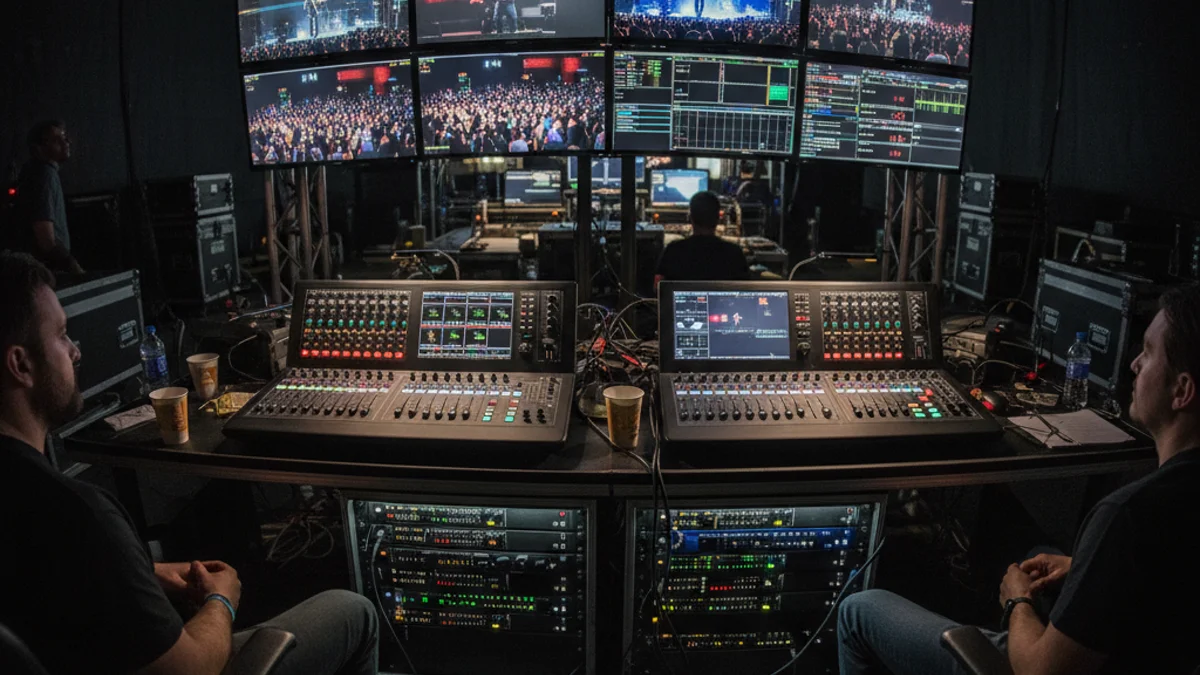
| Crew | A1 audio engineer, lighting tech, stage manager | Adds V1 video engineer, show caller, streaming/encoding tech |
| Redundancy | Spare mics and a backup playback machine | Spare encoders, backup internet path, second playback source |
The jump from one column to the next is rarely the equipment — it is the crew and the number of rehearsal passes. A hybrid build that reuses a room-only camera plan is where launches go wrong online.
Step checklist: from brief to load-out
Work the sequence in order. Each stage feeds the next, and skipping one shows up on show day.
- Define the outcome. Press, pre-orders, partner education or internal launch? Name the audience and the one message they must leave with. This decides scale, not the other way round.
- Survey the venue. Check ceiling height for rigging, three-phase power capacity, load-in door sizes, floor loading for a ground-stacked wall, acoustics, and existing approved rigging points. Do this before signing the venue contract.
- Write the technical brief. Schedule, stage diagrams, audio needs, screen sizes and content formats, lighting intent, power drop plan, network, and the crew you expect on site.
- Choose the partner. Ask for launch experience, own-versus-subrented inventory, named technicians, and a clear quote separating equipment from labour.
- Produce the plots. Audio plot, lighting plot with DMX addressing, video signal-flow diagram, stage plot, and the rigging plot with load calculations.
- Lock content early. Confirm pixel maps, aspect ratios and file formats well ahead. Bad aspect ratios are the most common self-inflicted launch failure.
- Rehearse properly. Build in load-in time, then run full technical checks, a content pass, speaker rehearsals and at least one complete run-through of the whole show.
- Run the show with on-site management. A technical director calling cues keeps lighting, sound, video and stage changes in sync.
- Plan load-out and debrief. Coordinate teardown against venue overtime charges, then review what to change next time.
Venue traps in France
Paris hotel ballrooms and historic venues in Lyon, Marseille, Nice and Cannes share a set of recurring limits. Low ceiling heights cap how high you can fly a screen and may force ground-support truss. Older power supplies often lack the clean, stable three-phase feed a large LED wall and moving-light rig demand, and licensed venues charge for extended load-out windows. Site access in city centres constrains truck size and lift timing, so the load-in plan drives the rig schedule. Survey early, and brief the venue on power and rigging before you commit.
If you are building a conference-style launch with a full programme around the reveal, our LED screen rental for conference and event page covers the multi-rig layout in more detail.
Common mistakes
Underestimating the budget is the first. Cutting corners on audio or lighting is visible and audible to everyone. Rushing setup and skipping rehearsal is the second — complex systems need install time, testing and practice. Poor venue selection comes third: a space that cannot power or rig your plan will cost more to work around than a better room costs to book. Neglecting content prep, leaving the online audience unplanned, and keeping the AV partner out of early conversations round out the list.
When the launch needs a screen the audience walks past before the doors open, signage is a separate build from the stage rig — see digital signage and display rental for the registration and wayfinding screens that carry the branding outside the main room.
FAQ
How far ahead should I book technical production for a product launch?
For a large launch, engage partners six to twelve months out, especially around Cannes and Paris congress seasons when both venues and technicians book early. Smaller events can work at three to six months. Late bookings lose the pick of equipment and crew.
What is the difference between AV rental and technical production?
Rental supplies the kit. Technical production adds the planning, design, rigging, operation and de-rig by named technicians and a project manager. For a launch, you need the second, because the risk sits in the integration, not in the equipment list.
Can you produce a hybrid launch with a live stream?
Yes. A hybrid build adds operated cameras, a vision mixer, encoding and a separate broadcast audio mix, plus redundancy on the critical path. It is a distinct crew and rehearsal plan from a room-only event.
What happens if something fails on show day?
Redundancy and rehearsal are the answer. Spare microphones, a backup playback machine, a second encoder and technicians who can re-patch fast keep a failure off the audience’s radar. The mitigation is planned in advance, not improvised.
Do you cover cities outside Paris?
We build and crew launches across Paris, Lyon, Marseille, Nice and Cannes, with equipment sourced from regional stock where it shortens load-in and cuts transport time.
Plan the reveal around the wall
Start with the outcome, survey the room for power and rigging, then let the LED wall, lighting and staging follow the message rather than fight it. Productions that rehearse the reveal as a single cue — wall, light, sound, product — are the ones that land, though the concept has to be settled first, which is where our ideas for product launch events come in. For a full-service build that covers LED, staging, lighting and AV crew from first brief to load-out, see live event production in Paris, or send us the brief.
For the wider convention-style production layer that sits behind that schedule, see running a convention’s AV production. Request a quote with your date, venue and the scale of the reveal, and we will come back with a plan and a costed equipment and crew list.